


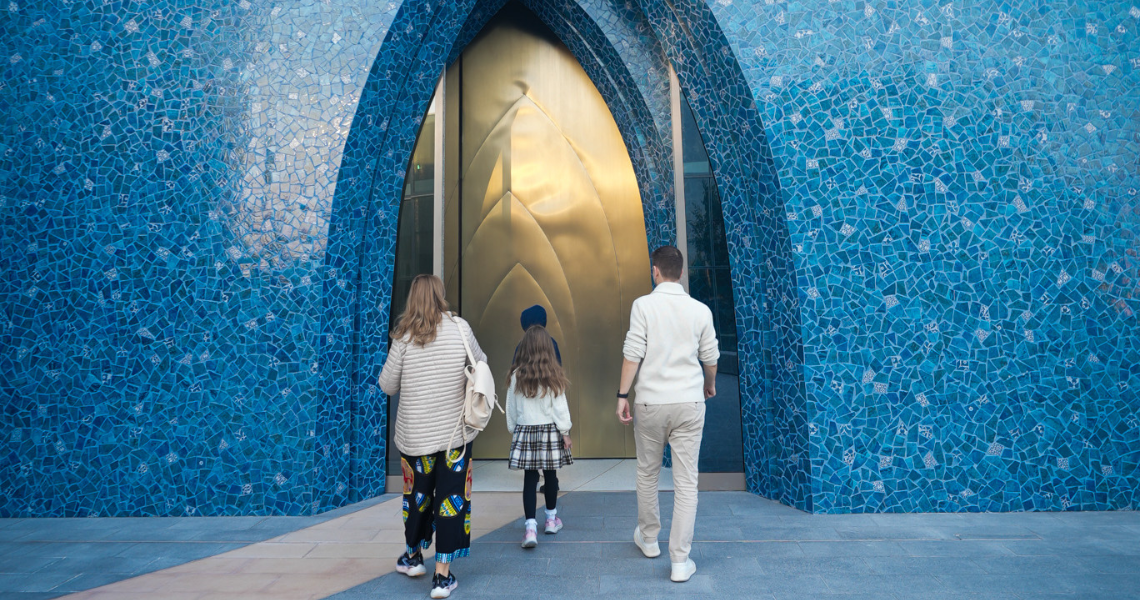
Education unfolds through art, dialogue, and hands-on practice at Lawh Wa Qalam: M. F. Husain Museum
Each year, the International Day of Education – marked on 24 January – offers an opportunity to explore how learning takes place across different settings. Alongside formal education systems, cultural and public spaces are increasingly part of this landscape.
Museums have become spaces where this broader view of learning is made visible. Through immersive experiences, dialogue, and creative practice, they create environments in which learning unfolds through exploration.
In Qatar, this role is evident within Education City, where cultural institutions sit alongside schools and universities as part of a wider educational ecosystem. Here, Lawh Wa Qalam: M. F. Husain Museum, founded by Qatar Foundation and honoring the iconic modern artist Maqbool Fida Husain, approaches education through an enduring relationship with art as a form of learning.
Its Learning and Outreach Program, launched last month, is centered on time spent in the galleries, where guided observation and dialogue provide the starting point for learning. Participants then move into practical workshops shaped by what they have seen and discussed. Designed for all ages, the program includes school visits, family sessions, and public workshops. These activities complement classroom learning through visual exploration, storytelling, and creative projects.
"Education through art is not about delivering fixed answers," said Jowaher Al Marri, Manager of Communications Outreach at Qatar Foundation. "It is about creating optimal conditions for curiosity, interpretation, and independent thinking. Museums offer a different kind of learning space where people are encouraged to slow down, question what they see, and build meaning through observation, conversation, and creative response."
School groups visit the museum to extend classroom work, looking at Husain's use of movement and then experimenting with their own gestural drawings. On weekends, family programs bring multiple generations together, creating shared spaces for adults and children to inspire one another with their own perspectives.
Learning at the museum is encouraged through discovery and is designed as a process rather than a one-off encounter. Younger children are introduced to visual language through activities focused on color, shape, movement, and mark-making, while older participants engage with more complex themes such as identity, memory, urban life, and abstraction.
Across age groups, workshops encourage participants to translate observation into action, allowing art to become a tool for expression, interpretation, and shared discovery.
The museum's educational work extends beyond its regular programming. An ongoing collaboration with Mathaf: Arab Museum of Modern Art brings together art, wellbeing, and interdisciplinary practice through workshops and public discussions running throughout January, including a panel with artists, healers, and clinicians exploring mental health through creative practice.
Through initiatives such as its collaboration with Mathaf and its ongoing workshops, the museum demonstrates what the International Day of Education emphasizes: that learning should be open and meaningful for everyone. Museums like Lawh Wa Qalam are growing in importance, showing how art can help people learn in thoughtful, creative, and truly human ways.
For more information about the Learning and Outreach Program of Lawh Wa Qalam: M. F. Husain Museum, visit https://lawhwaqalam.org.qa/, and follow on Instagram at @lawhwaqalam.