


WISE global research highlights perspectives of over 3,000 teachers and explores implications for national education strategies
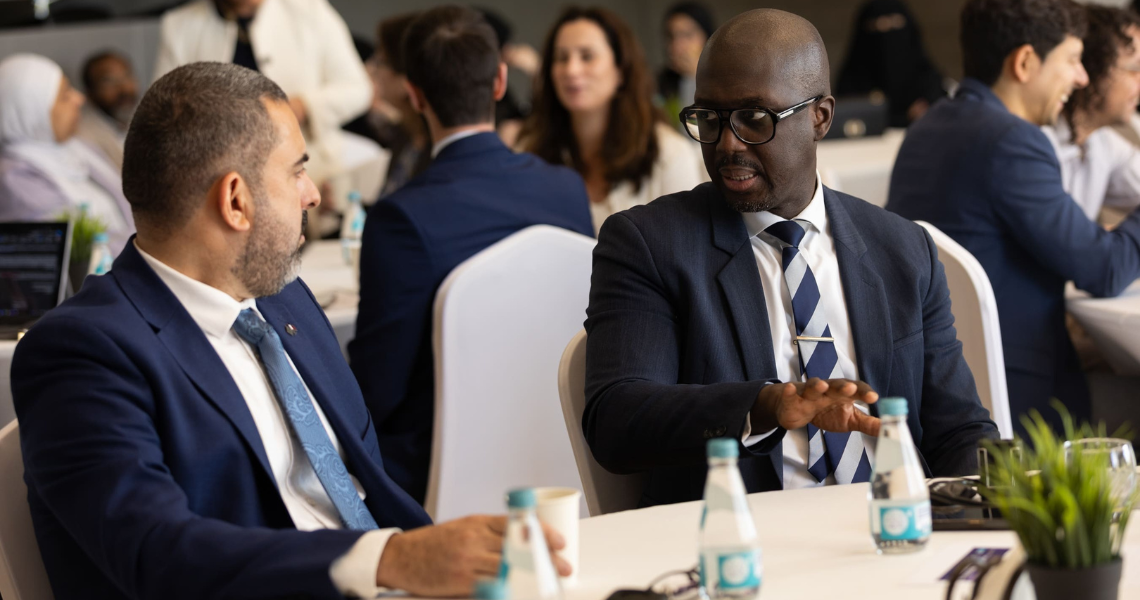
The World Innovation Summit for Education (WISE), an initiative of Qatar Foundation, hosted a policy dialogue event titled “AI & Teacher Readiness in K–12 Education: Global Research Findings and Strategic Implications” that explored the practical implementation of AI standards within school environments.
Opening remarks were made by WISE Research and Policy Director, Selma Talha-Jebril highlighting that “across the world, artificial intelligence is moving into classrooms faster than schools have had time to prepare for it—faster than policy”.
Moderated by Maimoona Junjunia, Research and Policy Associate at WISE, the discussion explored how teachers are currently engaging with AI, often in administrative or preparatory tasks, and underscored the importance of moving toward deeper, transformational applications in the classroom. Panelists highlighted the need for teacher agency, sustained professional development, and rigorous evaluation of tools through national initiatives such as the WISE EdTech Testbed. Shahd Dauleh, Innovation Manager at WISE, commented, “The WISE testbed allows us to move beyond hype and ensure AI tools are genuinely effective for teaching and learning.”
Lolwa Al-Nuaimi, Assistant Director of the Ea??Learning & Digital Solutions Department at the Ministry of Education and Higher Education, emphasized that “for AI to succeed in education, it must reflect our language, culture, and values while supporting teachers with the right tools.”
The dialogue also emphasized the broader purpose of the WISE Research & Policy Dialogue Series: to ensure that research findings are not confined to academic publications but actively inform policy and practice. “Research that sits in a PDF change nothing. Research that reaches the people with the power and responsibility to act on it can shift systems. The WISE Research & Policy Dialogue Series is designed to be exactly that bridge,” said Selma Talha-Jebril.
Practical examples from schools further illustrated the potential of AI in classrooms. Iyad Salameh, Teacher of Robotics and Automation at the Qatar Science and Technology Secondary School for Boys, shared how his students have used AI in handsa??on projects, remarking that “handsa??on projects show how students can use AI to build reala??world solutions, turning classrooms into innovation labs.” These experiences highlighted the importance of empowering teachers and learners to experiment with AI in ways that connect directly to curriculum and innovation.
Commenting on what is needed to sustainably meet teacher’s support in teaching with AI efficiently, Selma Talhaa??Jebril said: “Our study shows that 60% of teachers reported that AI helped them tailor instruction to meet diverse student needs. That is an encouraging signal. But in Qatar, a country with world-class digital infrastructure and strong national commitment to innovation, only 30% of surveyed teachers reported a strong understanding of how AI works in education. That gap tells us something critical: infrastructure and enthusiasm are necessary, but they are not sufficient. Importantly, educators here are not resistant; they are asking for tools that fit their language, curricula, and students.”